
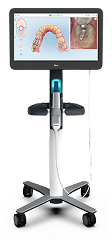
iTero Scanner
If you’ve ever had a traditional dental impression, you know the drill: a tray full of thick, chalky material, held in your mouth for what feels like far too long, followed by that unmistakable gag reflex. We don’t do that here. The iTero digital scanner replaces all of it with a small wand that captures a precise 3D image of your teeth in a matter of minutes, right in the chair, with nothing in your mouth but the scanner itself.
What makes this more than just a comfort upgrade is what happens next. The image builds in real time on a screen in front of you, so you’re not taking our word for what your smile looks like — you’re looking at the same map Dr. Shannon is. That visual becomes the working file for everything that follows: your treatment plan, your Invisalign trays if that’s your path, and your retainers down the line. Because the scan is digital from the very first step, there’s no re-taking impressions that came out wrong, no shipping delays waiting on a physical mold, and no guessing at measurements. It’s one accurate record, used consistently through your whole treatment — which is exactly the kind of efficiency this practice is built around.
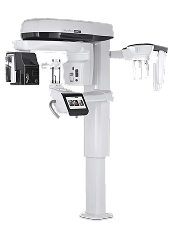
CBCT
A standard dental X-ray gives you a flat, two-dimensional picture — useful, but limited. CBCT, or cone-beam computed tomography, gives us something fundamentally different: a full three-dimensional view of your teeth, jaw, roots, and the surrounding bone structure, all at once.
This is where Dr. Shannon’s background genuinely changes how care happens here. Before he became an orthodontist, he was a physical therapist, and that training shaped the way he still looks at every case — not as a row of teeth to straighten, but as a system of muscles, joints, and bone that all have to work together. A flat image can’t show that system. A 3D scan can. With CBCT, Dr. Shannon can see how your jaw is positioned, how your roots are angled, and how everything fits together structurally before he ever finalizes your treatment plan.
The result is a plan built around your actual anatomy rather than a general assumption of what a bite “should” look like. That translates into fewer mid-treatment surprises, more precise movements, and a higher likelihood that your treatment finishes on the timeline we give you at the start — which, as you may already know, is something we take seriously.
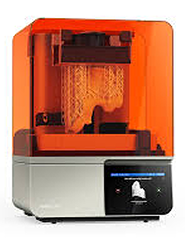
FormLab 3D Printing
Most orthodontic offices scan you, then send that scan out to an external lab and wait — sometimes a week or more — for models, retainers, or treatment aids to come back before your next step can happen. We shortened that process considerably by bringing it in-house.
Once your iTero scan is complete, our team can design and print custom pieces directly in our office using our Formlabs 3D printer. That includes precise physical models of your teeth, custom retainers, and other treatment aids that used to require an outside lab and a waiting period. Because we control that step ourselves, we control the timeline, too — which means less time between your appointment and your next piece of treatment, fewer shipping delays, and the ability to make same-day adjustments when something needs a second look.
It’s a genuinely small piece of equipment tucked into the back of our office, but it has an outsized effect on how quickly we can move for you. It’s also a fitting example of how we operate generally: when we see a way to save you time without cutting corners on quality, we take it.