
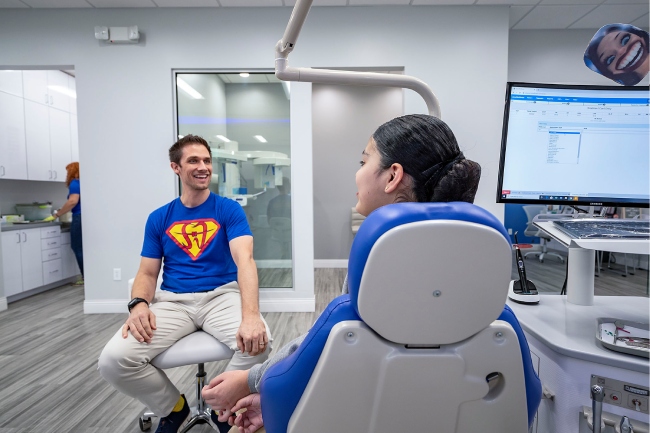
Our additional orthodontic services are available at both offices. In Davenport, we offer two-phase treatment, accelerated treatment, emergency orthodontic services, orthognathic jaw surgery, and retainers. In Kissimmee, we offer two-phase treatment, accelerated treatment, emergency orthodontic services, orthognathic jaw surgery, and retainers.
Accelerated Treatment
If your timeline is a real constraint — a wedding, a move, a season of life where you’d genuinely rather not be in treatment any longer than necessary — accelerated treatment may be worth discussing at your consultation. It’s not the right fit for every case, but for the right one, it can meaningfully shorten the time between your first appointment and your final result, sometimes cutting a multi-year plan down considerably.
Accelerated treatment isn’t one single technique — it’s a category of approaches we can layer into your plan depending on your case, your goals, and how quickly your teeth respond to movement. For some patients, that means more frequent adjustments and closer monitoring. For select cases, it means a surgical option like the one below. What it always means is an honest conversation up front about whether speeding up your timeline is realistic for your specific teeth, because we’d rather tell you the truth about what’s possible than promise a shortcut that doesn’t hold up.
Wilckodontics Method
For select cases, we offer accelerated treatment in partnership with a periodontist through a surgical technique known as Wilckodontics. The procedure works by gently modifying the bone around the teeth being moved — a process that essentially resets how quickly that bone remodels — which allows those teeth to shift into position significantly faster than orthodontic treatment alone would allow. In many appropriate cases, this can reduce total treatment time substantially compared to a standard timeline.
It’s performed by a periodontist, but it’s never handled as a separate, disconnected procedure. Dr. Shannon coordinates directly with the periodontist so your orthodontic movements and your surgical timeline are built around each other from the start — the surgery is scheduled around where your treatment plan needs it, and your orthodontic adjustments afterward are timed to take full advantage of the accelerated bone response while it lasts. Your care stays cohesive even though two different providers are involved.
This isn’t a shortcut we recommend broadly, and it isn’t right for every case or every patient’s health profile. It generally suits patients with more significant tooth movement needed who are also good candidates for a minor surgical procedure. We’ll tell you plainly at your consultation whether your case is one where Wilckodontics makes sense, and we won’t suggest it if a standard timeline will get you where you need to go just as well.
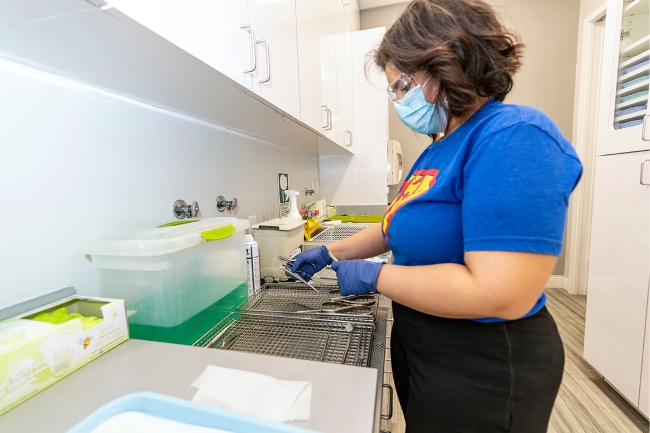
Two-Phase Treatment
Some kids benefit from treatment in two separate stages rather than one continuous course. Phase one typically starts while a child still has some baby teeth, usually between ages seven and ten, and focuses on guiding jaw growth, creating space for incoming permanent teeth, and addressing developing bite issues while there’s still enough growth left to influence how things settle in. This might involve a palatal expander, a partial set of braces, or another appliance suited to what your child’s mouth actually needs at that stage — not a one-size-fits-all device.
After phase one wraps up, there’s a resting period, often a couple of years, where we don’t do active treatment but we do keep watching. Regular check-ins during this window let us track how permanent teeth are coming in and catch early if anything about the plan needs to shift. Phase two begins once most or all permanent teeth have arrived, and focuses on final alignment — typically with braces or Invisalign, depending on your child’s preference and needs at that point.
The advantage of catching the right case early enough for this approach is that phase one can solve structural problems while they’re still small and developing, which sometimes means a shorter, simpler phase two than would have been needed if we’d waited until every permanent tooth was already in. Not every child needs two-phase treatment — plenty of cases are handled well with a single, well-timed phase — and we won’t recommend the two-stage approach just because it’s an option. But for the cases where it’s genuinely the better path, it’s one of the clearest examples of why we push for early evaluations in the first place.
Orthognathic (Jaw) Surgery
For a smaller number of patients, the issue isn’t just tooth position — it’s the underlying position of the jaw itself. When the upper and lower jaw don’t align properly, orthodontic treatment alone can straighten the teeth sitting on top of that misalignment, but it can’t fully correct the bite, the facial balance, or in some cases, the functional issues — like chewing difficulty or jaw pain — that come from the jaw bones themselves being out of position. That’s where orthognathic surgery comes in: a surgical procedure, performed by an oral and maxillofacial surgeon in close coordination with Dr. Shannon, that physically repositions the jaw to correct the underlying structural issue.
This kind of case is exactly where Dr. Shannon’s physical therapy background shows up most clearly, because a jaw surgery case is never just about the teeth. It’s built into your orthodontic plan as one continuous process from the very beginning, not a separate event that gets bolted on partway through. Braces are typically used first, for a year or more, to move your teeth into the precise position they’ll need to be in once the jaw itself is repositioned — a step called decompensation, since teeth often shift to compensate for a misaligned jaw over time, and that compensation has to be undone first. After surgery, braces continue for a period to fine-tune the bite and lock in the final result once the jaw has healed into its corrected position.
It’s a longer, more involved process than most orthodontic cases, often spanning a couple of years from first consultation to final result, and it requires real trust between you, Dr. Shannon, and the surgical team. We’re upfront with patients about that full timeline from day one, including what surgery itself involves and what recovery looks like, because a plan this significant deserves a completely clear picture before you ever commit to it.

Retainers
Braces and Invisalign move your teeth. Retainers are what keep them there. After active treatment ends, your teeth are still settling into their new positions for months afterward, and the bone and tissue around them are still adapting to where your teeth now sit. Skipping retainer wear — even for what seems like a short stretch, even just a week or two right after treatment ends — is the single most common reason a smile shifts back toward where it started. We take retainer care as seriously as we take the treatment that came before it, and we build clear wear instructions into every patient’s end-of-treatment visit so there’s no ambiguity about what’s expected.
Retainer Repairs
Retainers crack, get lost, or stop fitting the way they used to — it happens, and it’s not something to feel bad about calling us over. Whether it’s a hairline crack from an accidental drop, a fit that’s changed after a few years, or a retainer that’s simply gone missing, reach out and we’ll get you in quickly to repair or replace it. We’d genuinely rather see you the same week over a damaged retainer than have you skip wearing one and let your teeth start shifting in the meantime — a small, quick fix now is always easier than correcting movement that’s already happened.
Retainer Insurance
Because we know retainers are exactly the kind of thing that gets lost or damaged at the least convenient moment — left on a lunch tray, chewed by a dog, packed away and forgotten during a move — we offer retainer insurance as an option for our patients. It gives you a straightforward, affordable path to a replacement if something happens to yours, instead of paying full price for a brand-new retainer out of nowhere and waiting on a new one to be made from scratch. It’s a small investment that saves real money and real time if you ever need to use it. Ask our team about enrollment and coverage details at your next visit.
Emergency Orthodontic Services
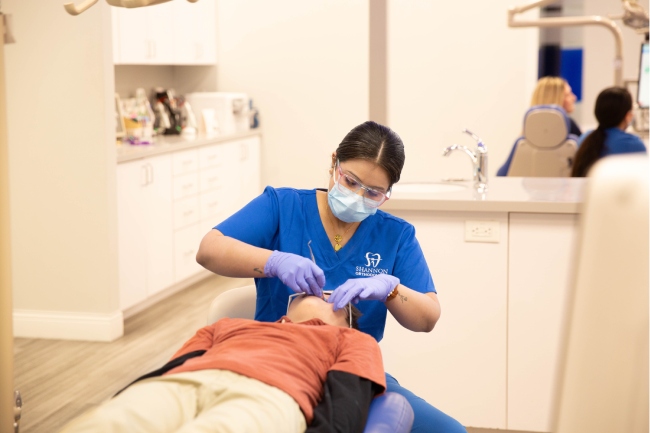
A poking wire, a broken bracket, a retainer that suddenly doesn’t fit right, an aligner that’s cracked or gone missing — orthodontic emergencies are rarely convenient, and they tend to happen at the worst possible moments: right before a big event, in the middle of a trip, on a weekend. We don’t make you wait around when one comes up. If something feels wrong or a piece of your appliance breaks, call us, and we’ll get you seen quickly, without the runaround of a long hold time or a scheduling gap measured in weeks.
Out-of-Town Patients
We’re minutes from the theme parks, which means we regularly see patients who are nowhere near their regular orthodontist — Disney-area visitors, international travelers, and families in the middle of a vacation who suddenly have a broken wire, a poking wire, or a lost aligner on their hands with no idea who to call. We treat those visits with the same urgency and care we’d give any patient of our own, no different intake, no second-class treatment because you’re not a regular. A vacation shouldn’t be derailed by an orthodontic problem, and we’ve built our scheduling to accommodate exactly this kind of unplanned visit alongside our regular patients.
Because our team is nearly entirely bilingual, language is rarely a barrier to getting you the help you need while you’re away from home, whether that’s explaining what’s wrong, walking you through a temporary fix, or getting you properly seen the same day. If you’re visiting the area and something happens with your braces or aligners, call us — we’d rather see you and get it handled than have you spend the rest of your trip worried about it.
Not sure which of these applies to your situation? Schedule a consultation at our Davenport or Kissimmee office, and we’ll walk you through the right path for your case.